Innovative Wheatpasting In San Francisco.
In recent years, a subtle but noticeable shift has been taking place in the streets of San Francisco. While billboards still tower over highways and social media continues to dominate digital attention, a more tactile, street-level form of advertising is making a strong comeback—wheatpasting. Interestingly, some of the biggest adopters of this approach are not legacy brands or underground artists, but modern AI companies looking to stand out in an increasingly saturated market.
Wheatpasting, the practice of adhering posters to walls and urban surfaces using a simple adhesive mixture, has long been associated with grassroots movements, music scenes, and counterculture expression. Today, however, it’s being reimagined as a strategic marketing channel. AI companies—often perceived as abstract, digital-first, and even impersonal—are turning to this physical medium to create something more tangible, more local, and more human.
There’s a reason for this shift. In a city like San Francisco, where innovation is constant and competition for attention is fierce, traditional advertising channels can quickly become noise. Social media ads are easily scrolled past, and billboards, while still effective, lack the hyper-local presence that brands increasingly crave. Wheatpasting, by contrast, lives directly in the neighborhoods where people walk, commute, and spend their time. It integrates into the daily visual landscape.
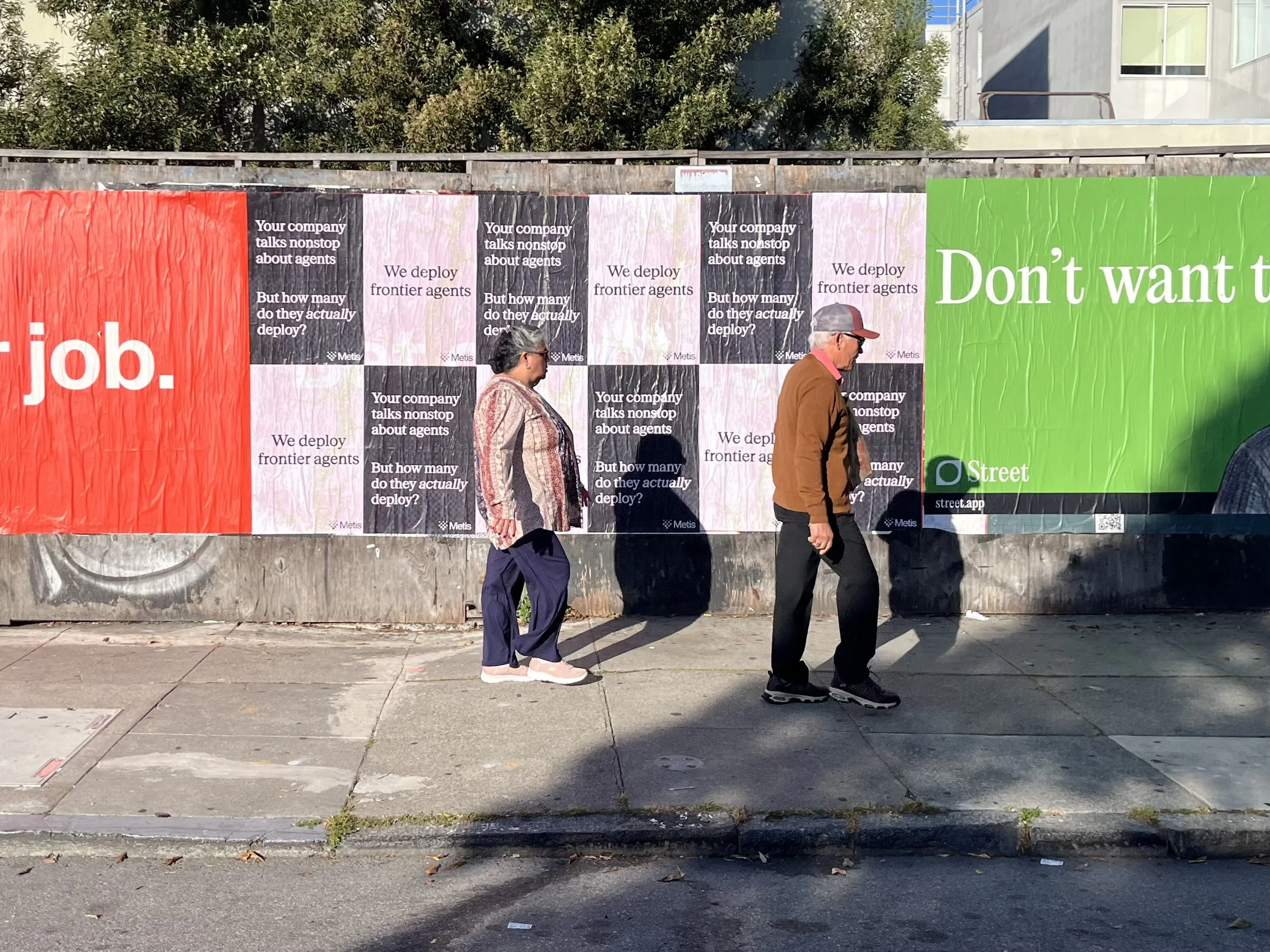
And people are noticing.
Across neighborhoods like the Mission District, SoMa, the Financial District, Mission Bay, and the Marina, posters are appearing with increasing frequency—bold designs, minimal copy, and often cryptic messaging that sparks curiosity. This format aligns well with the branding strategies of many AI companies, which often rely on intrigue, futurism, and clean visual identity. The result is advertising that feels less like a sales pitch and more like part of the city’s cultural fabric.
Another factor driving this trend is coverage and flexibility. Wheatpasting campaigns in San Francisco now offer access to extensive placement networks across high-traffic areas. With dozens of locations in each major neighborhood and the ability to scale up to hundreds of placements citywide, brands can achieve both saturation and specificity. Whether targeting tech professionals in SoMa or creative communities in the Mission, wheatpasting provides a level of geographic precision that few other mediums can match.
It also allows for agility. Campaigns can be deployed quickly, rotated frequently, and tailored to short-term launches or long-term brand building. For AI companies that move fast—often releasing new features, models, or products at a rapid pace—this flexibility is invaluable.
Quality plays a role as well. High-grade wheatpaste paper ensures that posters remain vibrant and intact despite the city’s weather and wear. This durability helps maintain a consistent visual presence, reinforcing brand recognition over time.
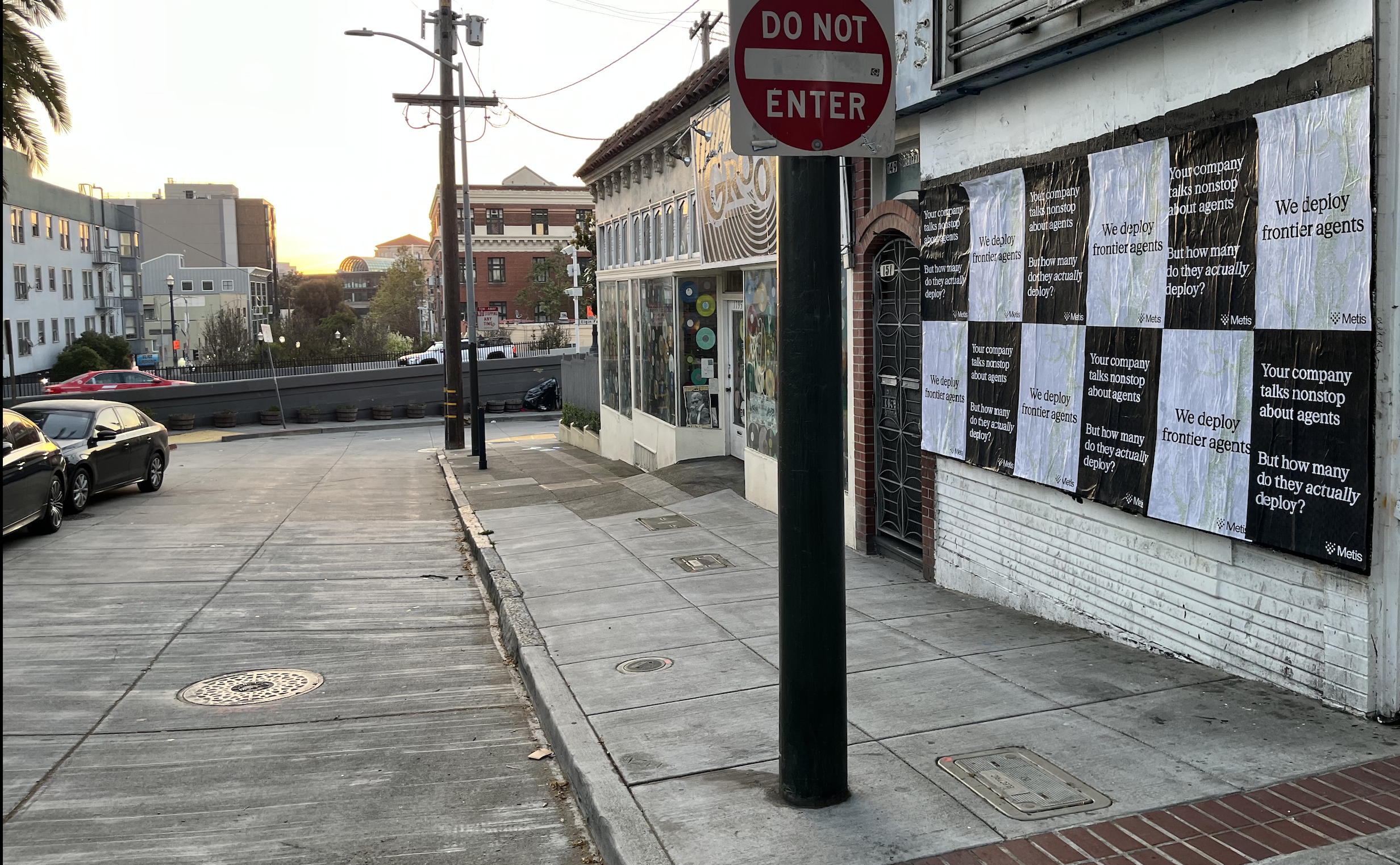
Ultimately, the rise of wheatpasting among AI companies reflects a broader shift in how modern brands think about visibility. It’s no longer just about being seen—it’s about being experienced in context. By stepping out of purely digital spaces and into the streets, these companies are finding new ways to connect with audiences on a more immediate and physical level.
So yes, billboards and social media ads are still dominant forces. But if you’ve been walking through San Francisco lately and feel like something has changed, you’re not imagining it. The walls are starting to talk again—and this time, they’re speaking the language of AI.
For brands interested in launching a wheatpasting campaign in San Francisco, comprehensive placement options are available across more than 200 locations citywide. Campaigns can be customized for both short-term impact and long-term visibility, with flexible poster sizing and premium materials that ensure strong street presence.
To learn more or to get started with a campaign, reach out today and bring your brand to the streets of San Francisco.
